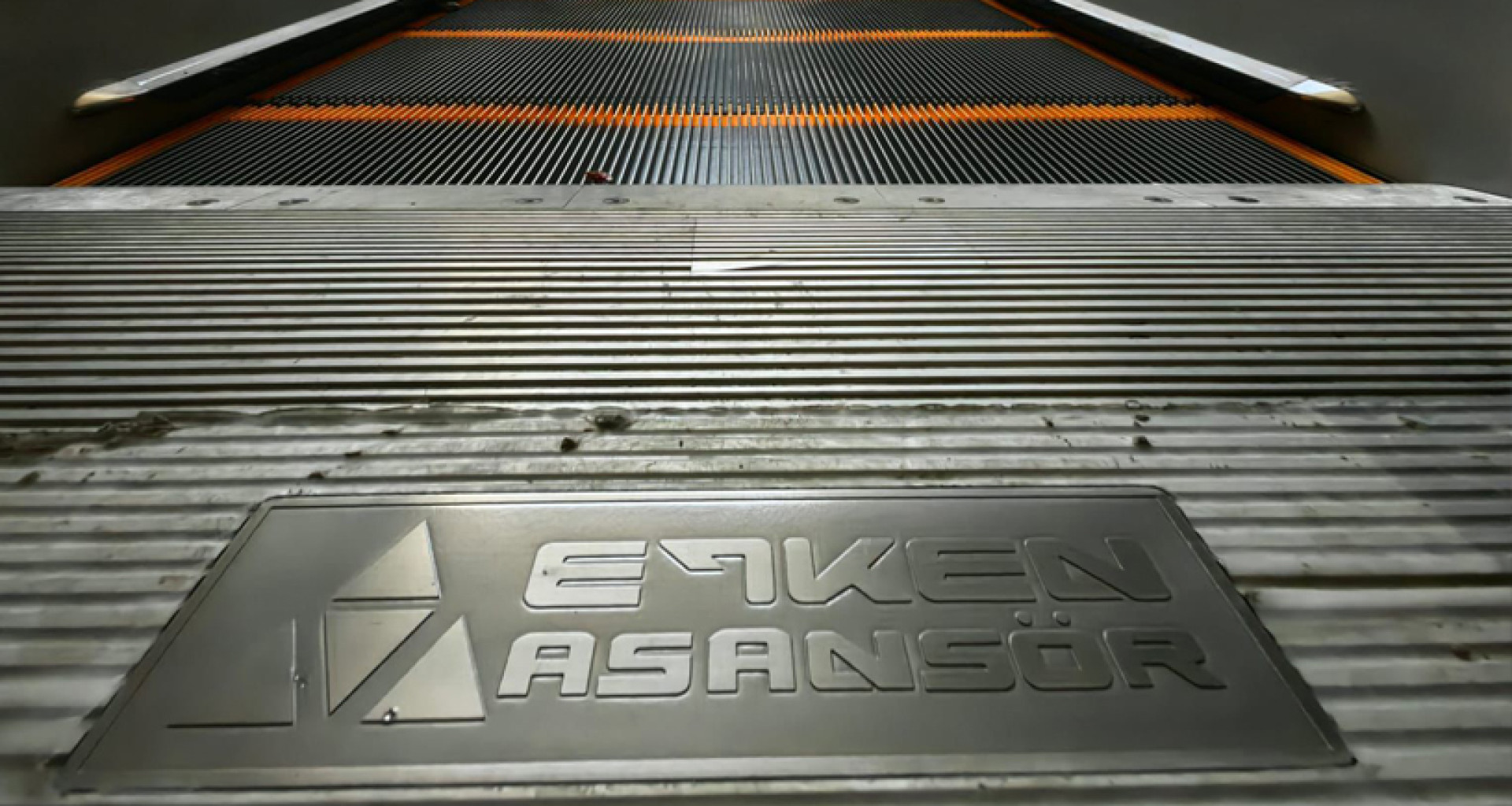
Escalators and Moving Walkways
ETKEN ESCALATOR SYSTEMS
(Special systems with 24°, 25°, and 27° incline angles are available for custom projects.)
Escalator systems are an unparalleled means of human transportation in every aspect. Key advantages of escalators include their space efficiency, reliability, ability to serve large crowds simultaneously and continuously, speed, time savings, and aesthetic appearance. Escalator systems should also be supported by elevator systems, as elderly individuals, people with strollers, or physically disabled persons may have difficulty using escalator steps. While escalators designed for such special needs do exist, they are not widely used.
ETKEN escalator systems offer ease of use and safety for the rapid transport of large numbers of people in busy indoor and outdoor public spaces. Designed based on a circulation logic tailored to the architectural function of the structure, ETKEN Escalator Solutions are customized according to the layout, size, and spatial function of the architectural environment.
In buildings with heavy pedestrian traffic—such as business centers, shopping malls, airports, subways, hospitals, and pedestrian overpasses—ETKEN Escalator Systems provide uninterrupted, fast, safe, cost-efficient, and aesthetic solutions.
ETKEN ESCALATOR OPERATING SYSTEM
The most important feature of escalators produced for outdoor use is their high-quality and durable materials, which provide resistance against corrosion. One of the key differences between escalator systems lies in the type of balustrade used: glass is typically used for indoor systems, while stainless steel panels are preferred for outdoor systems.
The general dimensions of escalators are determined by several variable parameters. Escalator planning is based on factors such as climbing angle, elevation height, step width, and speed. Both speed and step width are directly proportional to the transport capacity.
ETKEN’s Project and R&D teams calculate the required escalator dimensions based on building traffic and transport capacity to design custom solutions for each space. The escalator measurements are projected based on vertical elevation, the height of the connecting level, and the climbing angle (typically 30° or 35°).
CUSTOM ESCALATOR SOLUTIONS FOR EVERY PROJECT
The proper management of building traffic and human flow in architectural projects is transformed into custom escalator solutions by ETKEN’s Project Management Team, leveraging their expertise across various fields.
Designed to withstand heavy-duty conditions in train stations, airports, metros, stadiums, and pedestrian crossings, ETKEN Escalator Systems are suitable for all environments and feature heavy-duty escalator capabilities. Their hot-dip galvanized bodies and handrails made from steel wire offer long-lasting durability and reduced operational costs, even under harsh weather conditions.
ETKEN’s escalator safety sensor technology ensures the highest level of safety by enhancing passenger protection and maintaining compliance with security standards, even in high-traffic areas where technical issues must be minimized.
With 90% domestic production, and investments in R&D and innovation infrastructure, ETKEN delivers high-quality and reliable systems to the market with the shortest delivery times.